


news 2026
« BACK
 What the melting Antarctic really means for the global climate
 Amplifying Feedbacks Could Lead to the Near-Complete Disappearance of the Greenland Ice Sheet
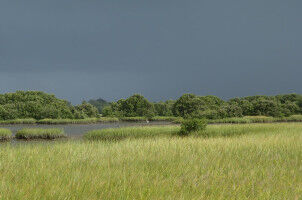 Warming winters and storm-driven dispersal facilitate northward mangrove expansion along the U.S. Atlantic coast
Environment
Results 1 - 4 of 4.
Environment - 04.03.2026
Safeguarding climate-resilient mangroves requires only a moderate increase in the global protected area
VUB research shows that targeted protection makes mangroves more resilient to climate change. A new study by an international team of researchers shows how climate change can be better considered when protecting mangrove forests. The researchers found that even modest increases in protected areas can make these ecosystems more resilient to climate change.
Earth Sciences - Environment - 04.02.2026
A new international study highlights the major influence of the melting of the Antarctic ice cap in the past evolution of ocean circulation. The results show how this process has profoundly influenced the Earth's climate, and suggest that it could play a decisive role in the ocean's future capacity to absorb man-made carbon dioxide and excess heat linked to global warming.
Earth Sciences - Environment - 22.01.2026
No ice left by the year 3000, with a potential contribution of more than 7 metres to sea-level rise Greenland, which has been prominently in the news in recent days, hosts a vast ice sheet. If it melts, it will become one of the largest contributors to global sea-level rise. Under a high-emissions scenario, the Greenland Ice Sheet is expected to largely disappear over time, with far-reaching consequences.
Environment - 07.01.2026
VUB research reveals how climate change enables mangroves to colonize new coastal regions In recent decades, mangroves along the Atlantic coast of North America have expanded into areas traditionally dominated by salt marshes. This shift shows that climate change is already reshaping temperate coastal ecosystems, with consequences for biodiversity, carbon storage, and shoreline protection.


